


    It's in your hands

    We harness digital and technology and high-tech for the good of the user and people and humanity

    At the UED Research Institute for User Empowerment we research, develop and teach the tech industry how to create technology that positively impacts the lives of its users

    Friends taking a selfie on a balcony overlooking the city

    What is User Empowerment?

    A whole generation demands empowerment!

    Behind the success of every well-known digital product – Google, Facebook, Instagram, Wolt, Waze, WhatsApp and more – stand experts in Human-Computer Interaction (HCI).

    These experts know how to build products that are easy to use (generation 1.0) and even delightful (generation 2.0) – the two basic levels of needs we have as users.

    In recent years a new demand has emerged: that digital products improve our lives. Not just hooking us like junk tech, not only thinking about our experience inside the product, but deeply understanding how technology can affect our lives beyond it — and answering that.

    This is generation 3.0 of Human-Computer Interaction. As early as 1990, Prof. Ben Shneiderman called this need User Empowerment.

    Users' needs from technology

    1980 · Functionality

    Nielsen and Shneiderman develop usability engineering, which enables a person to succeed in working with technology.

    1998 · Experience

    Norman develops user experience, which lets a person have an experience while using technology.

    2017 · Empowerment

    We, at the UED research institute, develop user-empowering design, which enables a person to be empowered by using technology.

    Big Tech is already talking empowerment

    Swipe sideways to view more items
    Amazon
    We empower Nonprofits and Small Businesses
    Microsoft
    Our mission is to empower every person and every organization on the planet to achieve more
    Canva
    Our mission is to empower everyone in the world to design anything and publish anywhere.
    Zapier
    As the leader in easy automation, we empower businesses to automate workflows....
    Facebook
    Give people the power to build community and bring the world closer together
    Google
    Empower users to feel in control of app use

    Real-world examples

    So what does it actually look like?

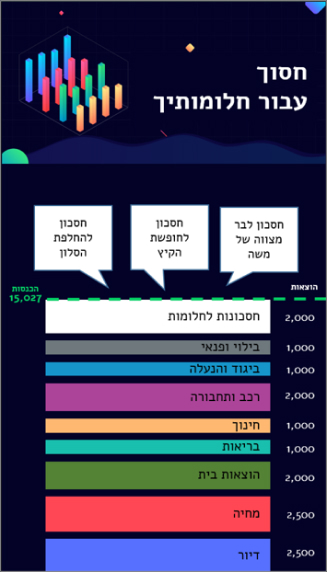
    Iron Dome for Attention

    The problem

    As parents we want to be with our kids, read them a bedtime story, be present and listen. In reality we are half with the kids and half listening for smartphone notifications; maybe someone needs us, the boss, that important group. We won't switch to "Do not disturb" because we're afraid of missing something important.

    The solution

    Here is a design solution by the institute that applies user-empowerment principles: Iron Dome for Attention. The parent switches the device to Iron Dome mode, and from then on the technology screens callers and senders, asking whether it is worth interrupting the parent's family time. Only if they confirm it is important does the device interrupt — so the parent can sit with the child calmly and fully attentive.


    Iron Dome for Attention
    The Ones Who Matter Most

    The Ones Who Matter Most

    The problem

    We know how it goes: the noisiest groups sit at the top of our chat feed, with new and urgent messages all the time. And who gets pushed to the bottom? The people who matter most — grandpa, a brother, a close friend. Those who don't demand our attention but matter. The urgent crowds out the important.

    The solution

    Here is a design solution by the institute that applies user-empowerment principles: The Ones Who Matter. A fixed bar pinned at the top of the chat feed lets you choose the people who matter most in your life. Not AI, not an algorithm — only you decide. After a while, the important people return to the center of your life.

    Dreams Do Come True

    The problem

    Everyone knows saving is hard. Giving up a restaurant treat now, or new shoes the kid wants because everyone has them, is especially hard. Living in the present is easier, because who knows what tomorrow brings. Saving for the future at the expense of the present is an oxymoron for most of us.

    The solution

    Here is a design solution by the institute that applies user-empowerment principles: Showing the future in the present. Inside a household budgeting app, we propose a component that instantly shows the future result of saving now. Skip the extra dish at the restaurant and the planned summer vacation gets better; postpone the third pair of shoes this season and the bat mitzvah party gets nicer.

    Dreams Do Come True
    Digital Belongs to Seniors Too

    Digital Belongs to Seniors Too

    The problem

    Meet Grandpa David, who — let's put it gently — wasn't born with a smartphone in hand. One day it was decided that all communication with the younger generation would go through digital channels. And he feels a bit out of the loop: the language, the abbreviations, the emojis, the special signs. And the communication fades…

    The solution

    Here is a design solution by the institute that applies user-empowerment principles: A multi-generational dictionary. With it, grandpa can understand his grandchild's digital language easily and without embarrassment. One tap on an unclear abbreviation, a confusing emoji or a special sign — and a simple, clear explanation with live examples appears. Grandpa David is back, and now he understands his grandchildren.

    What is the UED method?

    UED – User Empowering Design – is a design and specification method offering an orderly methodology and practical tools for applying user empowerment in digital products.

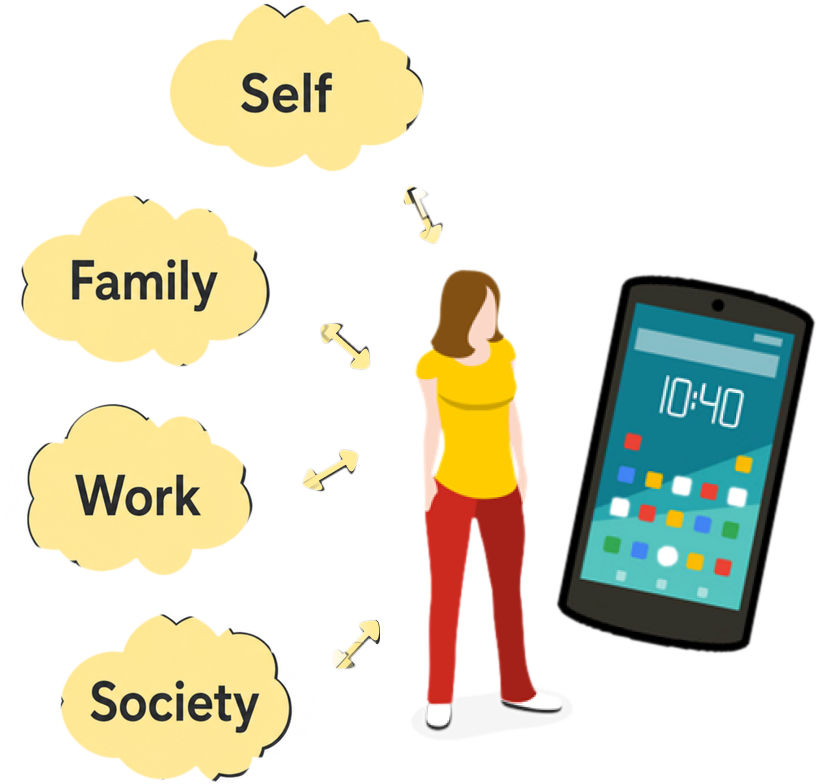
    The method takes the user's life into account on all its layers — personal, family, professional, social and more — and weighs them into the product specification process.

    It is based on broad research from positive psychology, behavioral economics, persuasive technology, design ethics, coaching and empowerment, refined for the digital world, and integrates with established methods such as User Centered Design and Design Thinking.

    The central path, the intervention range, human-potential mapping and the 8 models are some of the rules and principles in the method.

    Illustration: a person and a phone, surrounded by self, family, work and society

    Who are we?

    The UED Institute for User Empowerment is an independent academic research institute whose goal is to research, develop, apply, spread and teach the UED method — a method for specifying digital products that answers users' need for empowerment through technology.

    The institute was founded in 2017 by Dr. David Galula, who has researched user empowerment since 2009, joined by researchers and experts such as Dr. Hadar Ronen, Yishai Cohen, Dr. Ofer Muner, Dr. Adi Katz, Ravit Bar-Nur, Eyal Weissbin and more.

    • Dr. David Galula

      Dr. David Galula

      Head of the Institute

    • Dr. Hadar Ronen

      Dr. Hadar Ronen

      Senior Research Fellow

    • Dr. Adi Katz

      Dr. Adi Katz

      Senior Research Fellow

    • Dr. Ofer Muner

      Dr. Ofer Muner

      Steering Committee

    • Yishai Cohen

      Yishai Cohen

      Steering Committee

    • Ravit Bar-Nur

      Ravit Bar-Nur

      Steering Committee

    • Eyal Weissbin

      Eyal Weissbin

      Steering Committee

    • Ido Liberman

      Ido Liberman

      Statistical Advisor

    • Rotem Avni

      Rotem Avni

      User Relations

    • Amit Olami

      Amit Olami

      Research Assistant

    • Mayra Barel

      Mayra Barel

      UED Specifier

    • Ayelet Maimon

      Ayelet Maimon

      Designer

    What do we do?

    Since 2017, we have focused on 3 main areas:

    Vision & Impact

    • The book: Shaping HCI in generation 3.0
    • The Empowerment Index: An annual survey measuring impact
    • Changing mindsets: Leading public and industry discourse